Dear Families,
At first, it was the sound that caught your attention.
Not the usual rhythm of our turf field, but a steady beeping cutting through the spring air, followed by a coach’s voice calling out directions, and the unmistakable energy of first graders leaning into something entirely new.
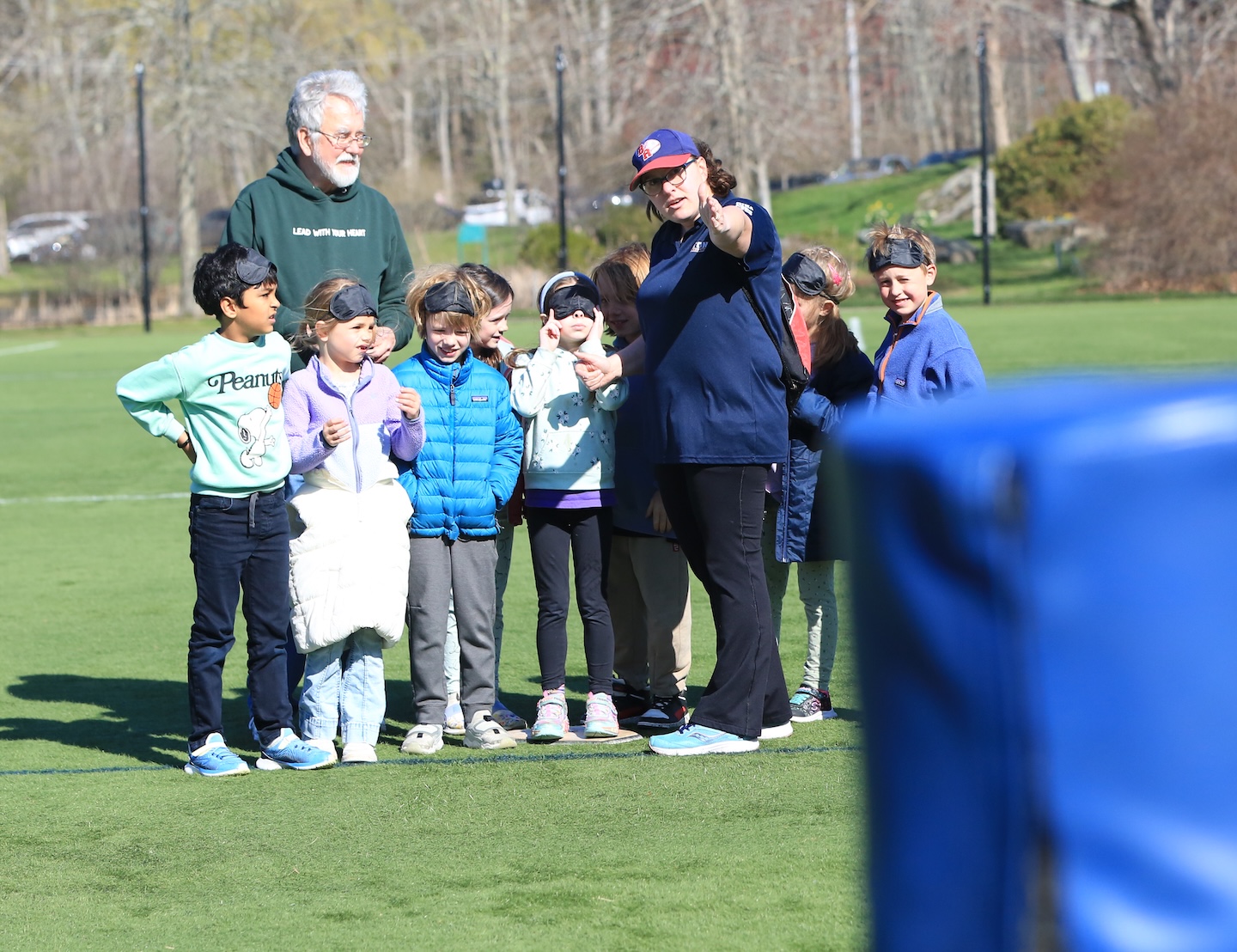
Our first grade had the privilege of welcoming the Boston Renegades, a beep baseball team composed of athletes who are blind or visually impaired, to lead our first graders through an adaptive sports clinic. What unfolded over that hour was a masterclass in attention, empathy, and the quiet, powerful act of seeing differently.
If you had stood at the edge of the field, you would have seen children in blindfolds, hands outstretched, bodies alert, ears tuned with a level of concentration that felt almost palpable. A ball, emitting a high-pitched beep, was rolled toward them; a base buzzed, guiding their moves; and voices, clear, calm, encouraging, offered directional cues: “Left… a little more… now go.”
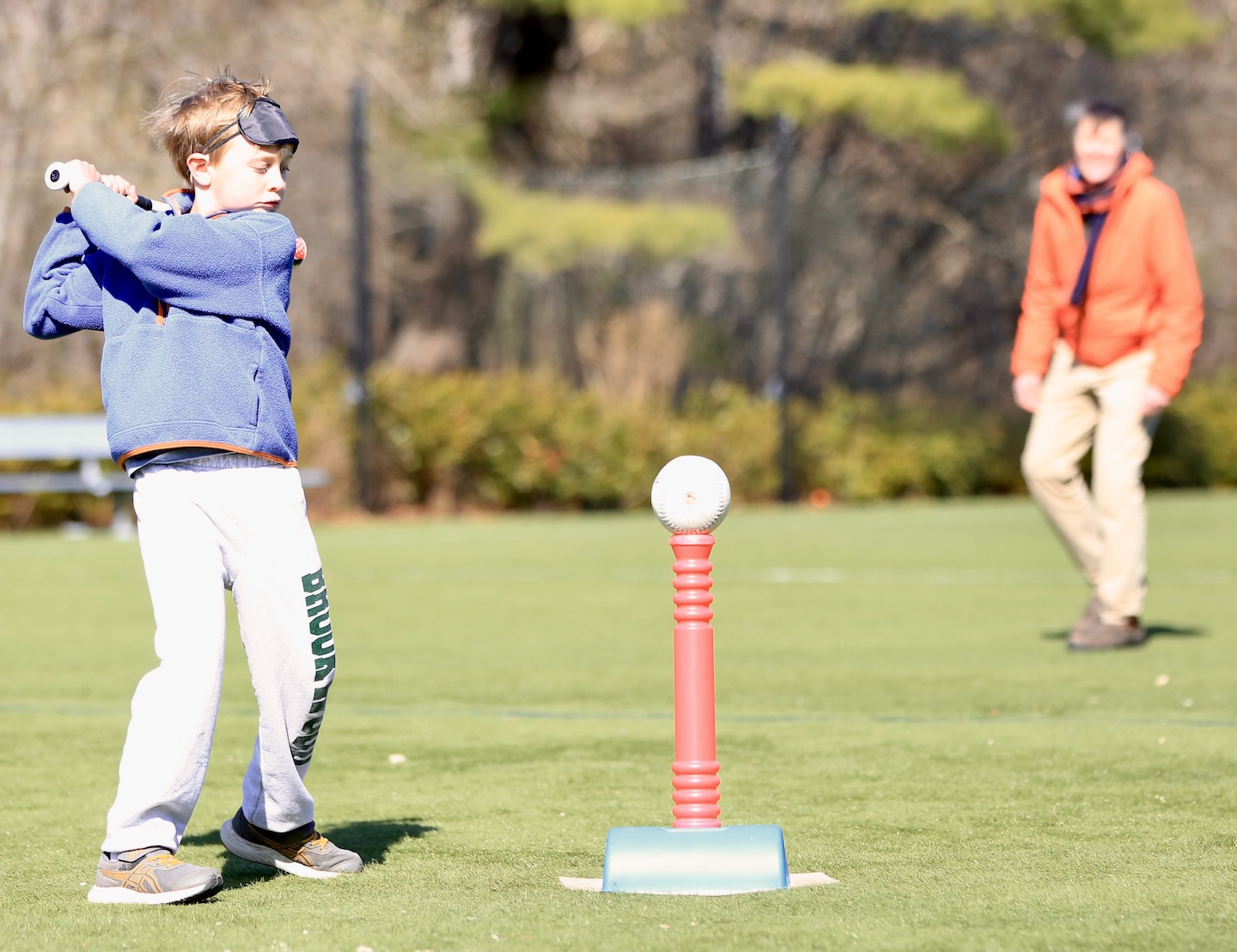
 A swing. A cheer. A sudden sprint toward a base they could not see, but could hear.
What struck me most was the shift it invited in all of us. For a moment, sight receded as the dominant sense. Listening became the primary way of knowing. Trust of one’s own body, and of the voices guiding you, became essential.
This is the kind of experience that sits at the heart of a Brookwood education.
Our first grade team has, over many years, been thoughtfully weaving together a study of visual impairment, accessibility, and changemaking. From exploring braille and the tactile nature of language, to designing and installing braille signage on campus, to reading stories that center different ways of experiencing the world, students have been building awareness and understanding. And, perhaps most importantly, a sense of responsibility.
Thursday was not an isolated event, but was a curriculum in motion. It is one thing to talk about empathy. It is another to practice it: to step, even briefly, into a different way of navigating the world, and to feel both its challenges and its possibilities. It is one thing to learn about accessibility. It is another to recognize, viscerally, how design choices either open doors or quietly close them.
As I left the field, the beeping had faded, but something of its rhythm lingered. A reminder, perhaps, that learning does not always arrive quietly. Sometimes it announces itself and asks us to listen more closely. And if we do, we may find that what initially feels like a shift away from what we know is, in fact, a step toward a fuller understanding of one another.
Warmly,
Jon
.png&command_2=resize&height_2=85 "Additional Staffing Updates for the 2026–27 School Year")


.png&command_2=resize&height_2=85 "Head of School's Letter - May 15, 2026 - Wellspring")